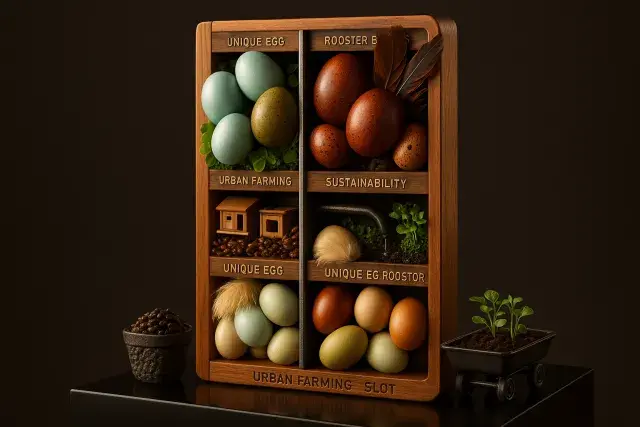
Unique Egg and Rooster Breeds Transform Urban Farming and Sustainability Today
Introduction
Chickens produce over 80 billion eggs annually worldwide, yet urban dwellers now raise more backyard flocks than ever, driven by self-sufficiency amid supply chain disruptions. These city farmers select breeds not for mass output but for traits that fit cramped balconies and rooftops: hens that lay blue or chocolate eggs, roosters that crow softly to avoid neighbor complaints. This shift redefines small-scale poultry beyond nostalgia, turning concrete jungles into protein sources that cut food miles and waste.
Unique egg-laying hens like the Araucana deliver pigment-rich shells packed with higher omega-3s from free-ranging diets, while roosters from heritage lines such as the Serama offer compact vigilance without aggression. Urban farming slots into this picture seamlessly, as these birds thrive in vertical coops and aquaponic systems, recycling kitchen scraps into fertilizer. Sustainability slots in through closed-loop systems where manure boosts compost yields by 30 percent over chemical alternatives.
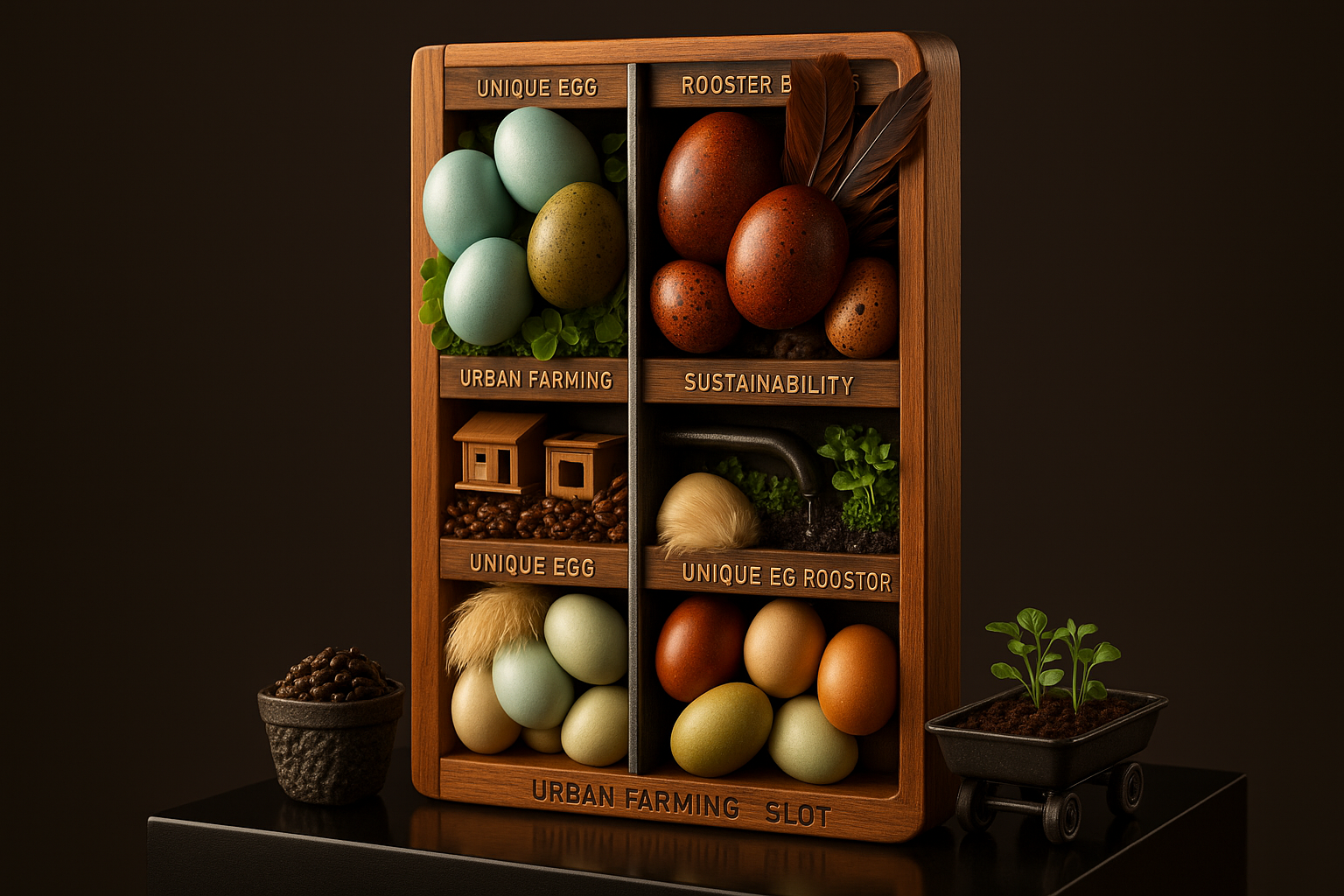
Explore how the Egg and Rooster slot metaphor captures this fusion, mirroring real-world pairings of unique egg roosters with specialized hens for resilient urban setups. This article breaks down breeds, practices, and impacts, equipping you to launch or refine a flock that sustains your household and neighborhood. Readers gain actionable steps, breed comparisons, and evidence-based benefits to integrate poultry into modern living.
Unique Egg slot Breeds for Urban Settings
Araucana and Ameraucana: Blue and Green Egg Producers
Araucanas lay true blue eggs due to a dominant gene, unaffected by diet or age, yielding 150-200 eggs yearly in confined spaces. Ameraucanas add olive tones, tolerating heat better than Leghorns, ideal for rooftop pens where temperatures spike. Both breeds forage efficiently, reducing feed costs by 20 percent in mixed urban gardens.
Olive Egger Hybrids and Cream Legbars: Versatile Color Options
Olive Eggers cross Marans and Araucanas for dark green shells, auto-sexing chicks simplify starter flocks. Cream Legbars produce pastel blue eggs and carry a barring gene for easy gender identification at hatch, cutting culling needs. These hybrids adapt to multi-level coops, laying consistently through winter with minimal light supplementation.
Marans and Welsummers: Dark Chocolate Eggs with Robust Health
French Marans deliver deep mahogany eggs, high in antioxidants from their coppery shells, while Dutch Welsummers offer speckled mahogany orbs. Both exhibit hybrid vigor, resisting urban pests like mites without chemicals. Expect 180 eggs per hen annually, with shells thick enough to travel short distances to markets.
Rooster Breeds slot for Balanced Flocks
Serama and Modern Game: Compact Protectors
Serama roosters stand under 20 inches, crowing at lower decibels suitable for apartments, yet they guard flocks fiercely against rats. Modern Games add agility, weighing mere pounds, perfect for vertical aviaries. Pair them with quiet hens to maintain harmony in dense neighborhoods.
Old English Game and Yokohama: Heritage Vigilance
Old English Game roosters show iridescent plumage and sharp awareness, integrating into permaculture without dominating space. Japanese Yokohama longtails provide ornamental value alongside pest control, their slow-maturing nature aligning with sustainable breeding cycles. These breeds enhance flock dynamics without excess noise.
Faverolles and Silkies: Gentle Integrators
Faverolles roosters sport five toes and muff beards, mellow temperaments easing integration with children or pets. Silkies, with fluffy feathers, brood eggs reliably, supporting natural incubation in urban heat. Both reduce stress-related egg drop by fostering calm environments.
Urban Farming slot Practices with Poultry
Vertical Coops and Aquaponics Integration
Stackable coops maximize balcony footprints, channeling droppings into aquaponic beds where fish waste fertilizes greens. Chickens scratch compost piles, accelerating breakdown by 40 percent, yielding soil for container crops. This setup processes 5 pounds of scraps weekly per dozen birds.
Noise Management and Zoning Compliance
Select low-crow varieties and add sound-dampening roofs to coops, complying with city limits on livestock noise. Community gardens often permit flocks under 10 birds; permits streamline legal operation. Track local ordinances via municipal apps for seamless setup.
Foraging in Limited Spaces
Design runs with edible landscaping—clover and insects supplement 30 percent of diet. Mobile tractors rotate over balcony planters, preventing soil depletion. This mimics natural behaviors, boosting egg quality and bird welfare.
Sustainability slot Through Breed Selection
Resource Efficiency and Waste Reduction
Heritage breeds convert feed to eggs at 2:1 ratios, outperforming industrial strains in low-input systems. Manure replaces synthetic nitrogen, cutting fertilizer emissions equivalent to 1 ton CO2 per flock yearly. Closed loops minimize transport footprints.
Biodiversity and Resilience Building
Maintaining rare breeds preserves genetic diversity against diseases like avian flu. Urban flocks act as seed banks, cross-pollinating with wild pollinators. Resilient genetics ensure production during climate extremes.
Community and Economic Impacts
Neighborhood coops share surplus eggs, fostering food security networks. Sell specialty eggs at premium prices—$6 per dozen for colored shells—offsetting costs. Programs like these scale to block-level sustainability hubs.
Unique Egg Rooster slot Pairings for Optimal Yields
Matching Temperaments and Genetics
Pair Serama roosters with Araucanas for blue-egg offspring in quiet flocks. Faverolles over Marans yield chocolate layers with docile traits. Test crosses in small groups to refine pairings.
Health and Productivity Synergies
Robust roosters improve hen fertility rates by 15 percent through vigilant protection. Silkies brood diverse eggs, hatching multi-color chicks for varied markets. Monitor ratios—one rooster per 8-10 hens avoids overbreeding stress.
Scaling for Urban Markets
These pairings produce Instagram-worthy eggs, commanding local demand. Track lineage for breed purity, appealing to gourmet buyers. Expand via hatchery shares within communities.
Frequently Asked Questions
How many square feet does a small urban flock need?
Four birds require 16 square feet of coop and 40 square feet of run, scalable vertically. Balconies suit tractor designs rotated daily. Local codes often cap at six hens without roosters.
Do colored eggs taste different or offer more nutrition?
Flavor matches white eggs, but pigments signal higher antioxidants from diverse diets. Blue eggs from Araucanas show elevated omega-3s when hens forage greens. Shell color reflects breed genetics, not yolk quality.
Can roosters live in apartments without complaints?
Choose bantam breeds like Serama with muffled crows under 70 decibels. Insulate coops and time hatches for quiet periods. Neighbors often appreciate fresh eggs in exchange.
What feed minimizes costs in cities?
80 percent kitchen scraps, weeds, and insects suffice; supplement grains. Brew black soldier fly larvae onsite for protein. This cuts bills to $0.20 per bird daily.
How do these breeds handle city winters?
Heritage lines like Cream Legbars maintain production with 14-hour light cycles. Insulate coops and use deep litter for warmth. They outperform hybrids in cold snaps.
Are permits always required for backyard chickens?
Check municipal codes—many allow four hens sans permit. ROOSTER bans common; apply for variances with noise plans. Community advocacy eases restrictions.